


Morning Market Updates
2026-09-08T06:15:40  read more
 read more
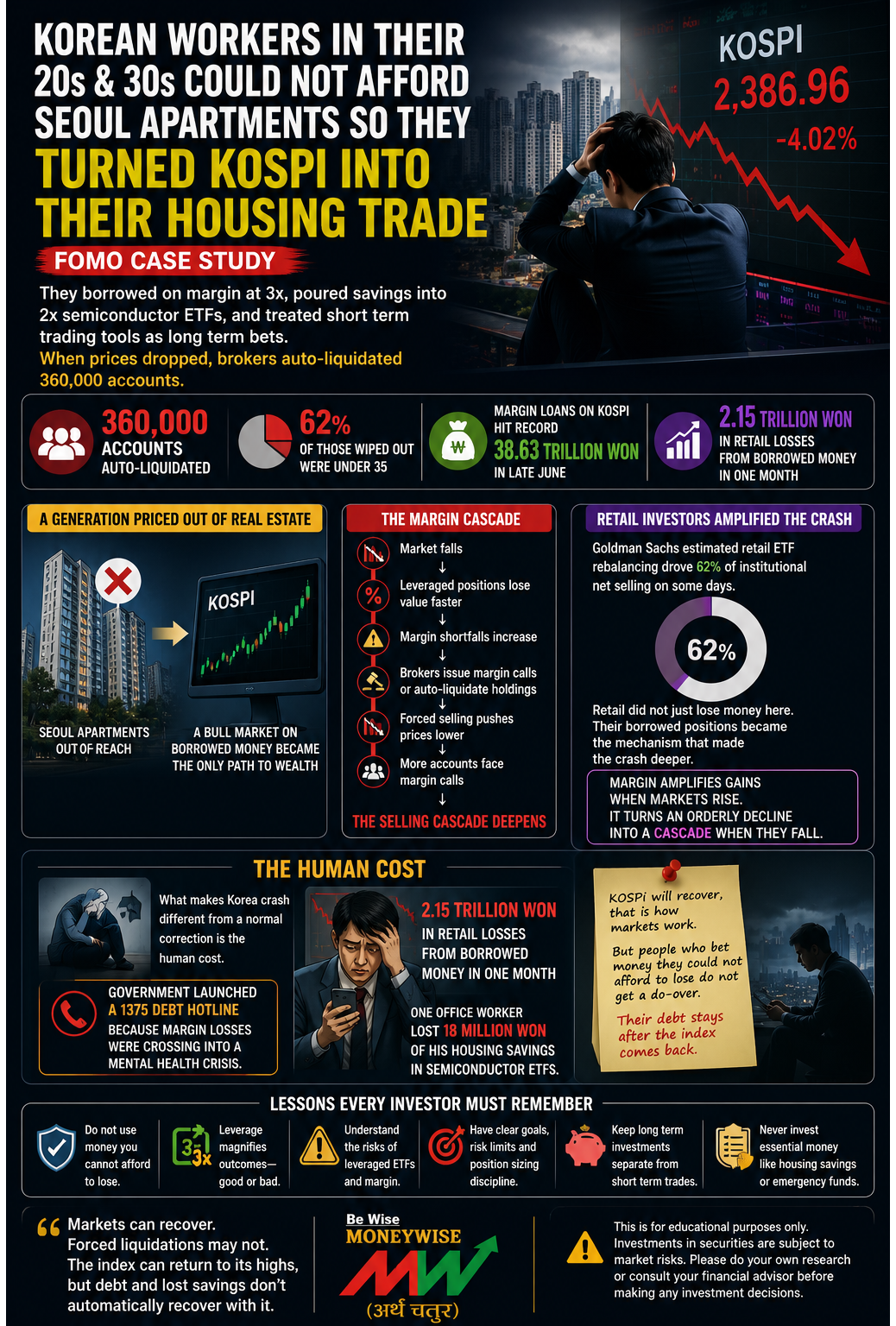
Korean workers in their 20s and 30s could not afford Seoul apartments so they turned KOSPI into their housing trade (FOMO Case Study) They borrowed on margin at 3x, poured savings into 2x semiconductor ETFs, and treated short term trading tools as long term bets. When prices dropped, brokers auto-liquidated 360, 000 accounts. 62% of those wiped out were under 35. A generation priced out of real estate treated a bull market on borrowed money as their only path to building wealth, that bet did not hold Margin loans on KOSPI hit record 38.63 trillion won in late June. When prices fell, brokers sold holdings to cover shortfalls, pushing prices lower, triggering more margin calls. Goldman Sachs estimated retail ETF rebalancing drove 62% of institutional net selling on some days. Retail did not just lose money here. Their borrowed positions became the mechanism that made the crash deeper. Margin amplifies gains when markets rise. It turns an orderly decline into a cascade when they fall. What makes Korea crash different from a normal correction is the human cost. Government launched a 1375 debt hotline because margin losses were crossing into a mental health crisis. 2.15 trillion won in retail losses from borrowed money in one month. One office worker lost 18 million won of his housing savings in semiconductor ETFs. KOSPI will recover, that is how markets work. But people who bet money they could not afford to lose do not get a do-over. Their debt stays after the index comes back.
 read more
  read more
 We hate spam too.


